
The research
The thinking behind Pip
Pip isn't just a nice character. The idea behind him is grounded in real, established child psychology. Here's the thinking, in plain English.

01
Comfort objects are a normal, healthy part of growing up
In 1953, the paediatrician and psychoanalyst Donald Winnicott described what he called a transitional object: a small, familiar thing a young child keeps close, often a blanket or a soft toy, that helps them feel secure as they begin to separate emotionally from a parent.
The object stands in for that parent's calming presence when the parent is not physically there. It is not a sign that something is wrong. It is one of the ordinary ways a small child learns to hold themselves steady.
Winnicott's idea has been studied and supported extensively in the decades since, and is now a well established part of how we understand early childhood development. Later work describes the object's main job simply as reducing anxiety, and found that physically handling it, holding it, squeezing it, keeping it within reach, is part of how it helps, not just what it represents.
02
Putting feelings into words can help
This isn't just about worries. It turns out saying anything out loud, good or bad, does something real in the brain.
Putting feelings into words can help regulate emotional responses. Research into 'affect labelling,' including Lieberman et al. (2007), found reduced amygdala activity when people put emotional experiences into words.
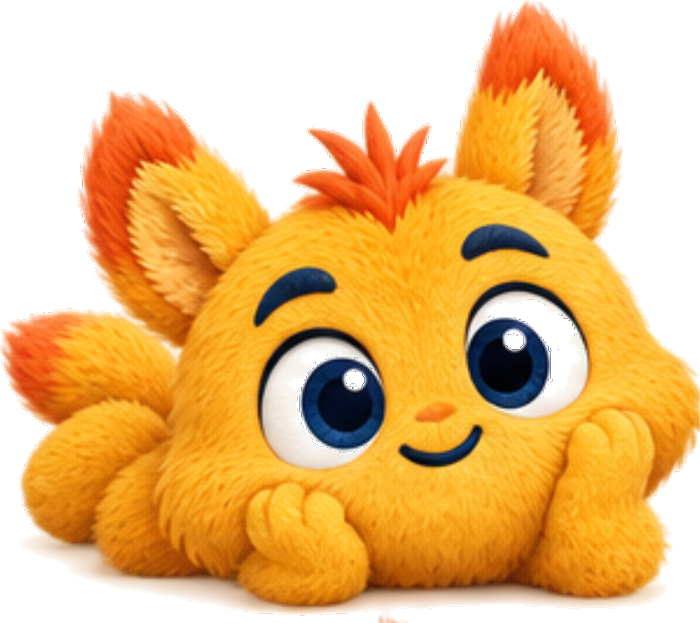
Pip borrows from these principles without pretending to be a therapeutic intervention. He's simply a familiar presence and an invitation to say something out loud, whether it's something that's bothering you, something exciting, or just something you want Pip to know.

03
There when wanted, and not when he isn't
Pip doesn't create dependence. He's there when wanted, and irrelevant when not. Some children may stop using the whisper hole after three weeks. Some may still tell Pip things at the end of Senior Infants. Neither is failure.
He is a bridge for the stretch of time when the world still feels new and very big, and nothing more than that. Whatever a child tells him isn't held or stored. He passes it on, gently, that night, to the monster babies at their bedtime.
None of this is complicated. It's just a small, well understood idea, built into something a child already carries with them every day.
Join the waitlistSources
Winnicott, D.W. (1953). Transitional Objects and Transitional Phenomena.
Lieberman, M.D. et al. (2007). Putting Feelings Into Words: Affect Labeling Disrupts Amygdala Activity in Response to Affective Stimuli. Psychological Science, 18(5), 421-428.